Is Your Portfolio Drifting? How to Rebalance and Manage Your Investments Like a Pro
The greatest risk to a well-built portfolio often comes from its own success. As your strongest assets outperform, they naturally claim a larger share of your capital - quietly concentrating risk and pulling your asset mix away from its original design.
This gradual shift, known as portfolio drift, happens subtly in the background of a rising marketing. Over time, it can distort your strategy, leaving you exposed when markets inevitably change. That’s why learning how to manage investments through regular rebalancing isn’t just a smart habit - it’s a cornerstone of long-term success.
What Is Portfolio Drift and Why It Happens
Portfolio drift is the natural process where market performance alters the weightings of your assets. A tech stock that started as 5% position can easily balloon to 15% after a strong year, while other holdings lag.
This isn't a failure; it's a sign that some of your decisions have paid off. However. the danger is that this unmanaged growth can quietly undermine your strategy. Portfolio drift can:
- Subtly Increase exposure to volatile sectors
- Weaken the diversification you’ve worked hard to build
- Make it harder to stay calm and objective when markets turn
Recognising drift early allows you to correct course before small imbalances turn into major risks.
A Simply Four-Step Guide: How to Rebalance Your Portfolio
Rebalancing is about instilling structure and discipline back to your investment plan. It’s not about chasing short-term gains - it’s about maintaining alignment with your long-term goals and keeping the risk where you want it.
- Review Your Plan: Start with your original allocation. What mix of shares, sectors, and asset classes was designed to meet your goals and risk profile? Use this as your benchmark.
- Assess Where You Stand: Analyse your current portfolio to identify where weightings have shifted. Which holdings have grown beyond target? Which areas are underrepresented and may need reinforcement.
- Decide with Data: This is where clarity is crucial. Base your adjustments on sound stock research and fundamental quality, not market noise or emotion.
- Act with Confidence: Execute the necessary trades to bring your portfolio back into balance. This discipline is what builds stability over time.
How Stock Doctor Helps You Manage Investments Effectively
Knowing what to rebalance - and when - requires clarity, not guesswork. That’s where Stock Doctor helps you take control with confidence. We provide the institutional-grade framework to help you execute your portfolio management with precision.
With Stock Doctor at your side, you gain:
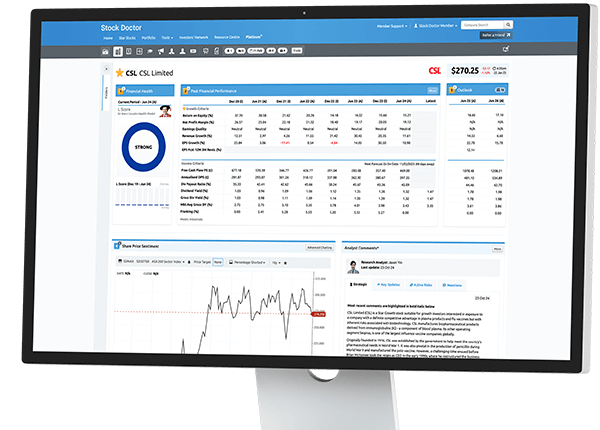
- Proven Research Clarity: Our proprietary Lincoln Financial Health Model screens every ASX-listed company for financial strength and sustainability - cutting through the uncertainty.
- Actionable Insights: Our clear “Buy”, “Hold”, and “Sell” recommendations provide data-driven guidance, simplifying complex decisions.
- Powerful Stock Analysis Tools: See the data behind every recommendation with our stock analysis tools and act with the confidence that comes from a comprehensive approach.
Rebalancing Strategies for ASX Investors
For Australian investors, a consistent rebalancing strategy tailored to the rhythms of the ASX is vital. The right approach depends on your personal style, but consistency matters more than perfect timing.
Common methods include:
- Time-based rebalancing: Set a regular schedule (quarterly or annually) and stick to it.
- Threshold-based rebalancing: Make changes only when an asset class moves beyond a set percentage of your target allocation (e.g. 5%).
Long-term wealth isn’t created by accident. It is built with intention. Build your confidence with our library of ASX Investing Strategies, and transform your approach to portfolio management