5 'secrets' to stock selection
There are many reasons to invest in stocks. Some of us treat it as a bit of a punt, in it for the thrill of pitting our stock selection skills against other players in the market. Others look to the market as a generator of long-term wealth. Whatever the motive, with thousands of stocks listed on the Australian Stock Exchange (ASX), how can an investor choose which ones to buy? Let's look at a few key considerations.
- Is the company growing its profits? In straightforward terms, the value of a company can be calculated by adding together all of its future profits. All else being equal, a company that consistently grows its revenue year on year will increase in value more quickly than a company with slower profit growth.
- How big is the company? Big companies may dominate their markets, reducing their potential for future growth. Companies with a smaller market capitalisation (share price multiplied by the number of shares on issue) may be younger and expand into new markets and industries that support more rapid growth. However, the share price of smaller companies may be more volatile. That can be attractive to investors who use periods of share price weakness to top up their holdings but less attractive to investors wanting more stability.
- How much debt does the company carry? If a company is paying lots of interest, then there's less cash available to pay dividends and to invest back into the company's core business. While a company may be able to use debt to grow, highly indebted companies are more likely to see their share price come under pressure in periods of market turmoil than their less indebted counterparts.
- What does the company do with its profits? There are two things that a company can do with its profits. It can re-invest them back into the business to boost its growth. Or it can pay dividends to its shareholders. Whether it's best to opt for a high dividend, low growth company, or a low dividend, high growth, one depends on individual requirements. Many investors depend on dividends for their day-to-day income. Others prefer to forgo annually taxable dividends favouring capital growth that is only taxed when the profits are realised.
- Does a new stock complement currently held stock? The most basic risk management tool in an investor's toolbox is diversification. Buying stocks in a big bank won't provide much of a diversification benefit if the portfolio already holds many stocks in other big banks. Mixing financials with resource, biotech, or industrial stocks will deliver better diversification which can mitigate the risk of loss when one industry is underperforming.
There isn't one single magic rule to building a stock portfolio. For one thing, much depends on the goals and circumstances of the individual investor, their attitude to risk, and prevailing market and economic conditions.
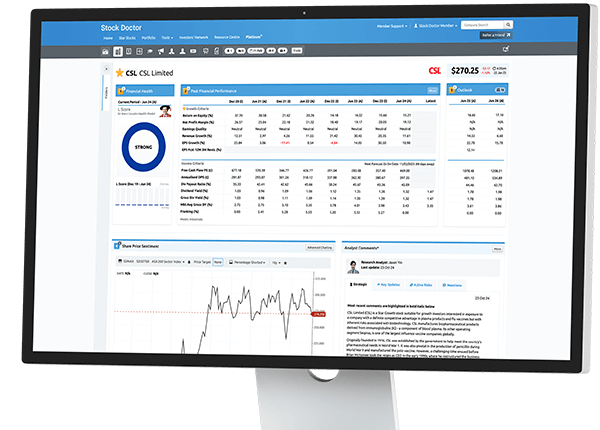
Whatever your situation, Stock Doctor can help you unlock the secrets of stock selection. Our Financial Health Model, proven for over 35 years, provides a fundamental investment principle. It encapsulates the thorough due diligence that investors need to undertake on a business's financial accounts before deciding to invest in a stock that could provide a high return investment.